
Should You Use a Storage Unit When Downsizing?
If you're downsizing in the Boston area, someone has probably said it already: "Let's just put it in storage for now."
It's an understandable impulse. Downsizing a home after decades of living in it is emotionally exhausting, and a storage unit feels like a pressure valve. You don't have to decide today. You can come back to it later.
As senior move managers serving Boston and the surrounding communities, we've seen storage units work beautifully for some families and turn into expensive, guilt-filled burdens for others. The difference almost always comes down to one question: is there a plan?
Here's how to tell whether a storage unit makes sense for your family's downsize.
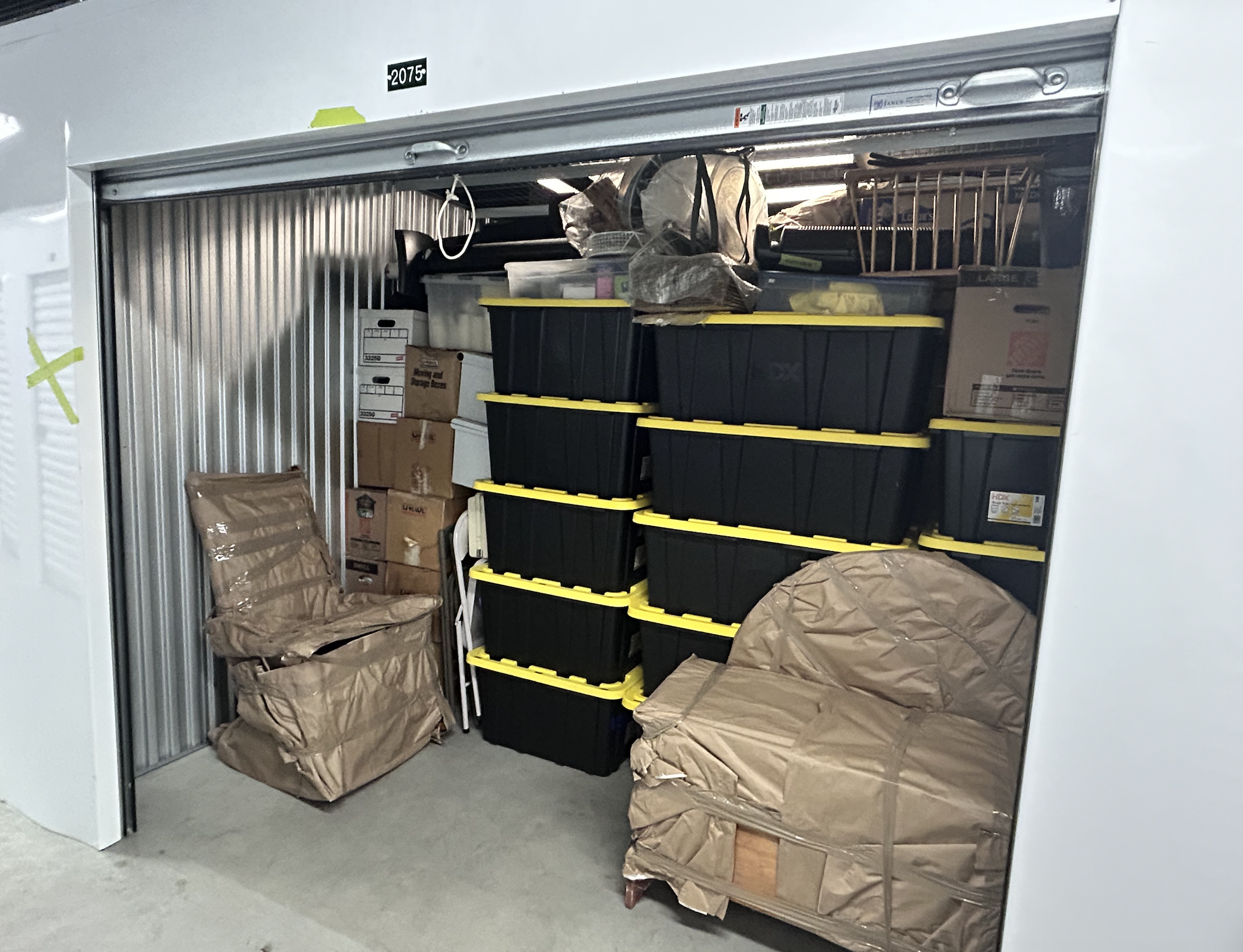
Storage unit used by a family during a home renovation.
Why Storage Units Are So Tempting During a Downsize
Senior downsizing asks families to make hundreds of decisions in a short time, and many of those decisions carry real emotional weight. The dining table where every holiday happened. Dad's tools. Boxes of letters. Decision fatigue is real, and when you're worn out, "later" sounds like relief.
The trouble is that "later" rarely gets easier. The items don't lose their emotional weight in a storage unit. They just gain a monthly bill.
When a Storage Unit Makes Sense
Storage can be a smart, practical tool when it has a clear purpose and a clear end date. Good reasons to use one include:
A gap between move-out and move-in. If your parent is leaving their Newton or Brookline home before their new apartment or assisted living residence is ready, short-term storage bridges the timeline without rushing either move.
A family member is taking items but can't receive them yet. If your daughter in Somerville is inheriting the piano but won't be in her new place until spring, storage with a pickup date is a reasonable solution.
Items are waiting on a planned sale, consignment, or estate sale. When belongings are headed to auction or a scheduled sale, holding them briefly keeps the process organized.
A home is being staged for sale. Clearing clutter before listing a home in the Boston market can make a real difference, and a unit can temporarily hold furniture that doesn't fit the staging plan.
In each of these cases, the storage unit is a step in a plan, not a replacement for one. Before signing a lease, write down what's going in, where each item is ultimately headed, and the date the unit will be empty.
When a Storage Unit Is Probably the Wrong Choice
Storage tends to backfire when it's used to avoid decisions rather than support them. Watch for these signs:
"We'll sort it out later" with no date attached. Without a timeline, units tend to stay full for years. Boston-area storage costs can quietly add up to more than the belongings are worth.
Storing things "in case" your parent needs them again. When someone is moving to a smaller home or a senior living community, most of what goes into storage never comes back out.
Using storage to spare feelings. Sometimes families store items to avoid a difficult conversation about who gets what, or to avoid telling a parent that something won't fit. That conversation doesn't disappear. It just gets postponed, often until after a loved one has passed, when it's even harder.
The storage unit becomes the next person's burden. We often hear from adult children who have inherited not only a parent's belongings but a storage unit full of their grandparents' belongings too.
If you recognize your family in any of these, it doesn't mean you've done anything wrong. It means it may be time for a different approach to the decisions themselves.
Questions to Ask Before You Rent a Storage Unit
Before committing, sit down with your family and answer these honestly:
What exactly is going into the unit, and where will each item end up?
What date will the unit be empty?
Who is responsible for making that happen?
What will it cost per month, and for how many months?
Is storage solving a logistics problem, or postponing a decision?
If you can answer all five clearly, storage may be a helpful part of your plan. If you can't, it's worth pausing.
Downsizing With Dignity in Boston
At Downsizable, we help Boston-area seniors and their families sort, distribute, and move with care. Whether you're moving a parent from a longtime family home in Wellesley to a condo in Quincy, or helping someone settle into assisted living, we handle the details so your family can focus on each other.
Sometimes that includes coordinating short-term storage with a clear plan. More often, it means helping your family make confident decisions now, so nothing is left hanging later.
Planning a senior downsize in Boston or the surrounding area? Contact Downsizable to schedule a consultation.