
How Long Does Estate Cleanout Really Take — and Why Grief Makes It So Much Harder
What no one tells you about the hours, the decisions, and the emotional weight of clearing a loved one's home
The casseroles have stopped coming. The sympathy cards have slowed to a trickle. And now, sometimes just days or weeks after losing someone you love, you find yourself standing in their home — surrounded by sixty years of living — with a trash bag in one hand and absolutely no idea where to begin.
Estate cleanout is one of the most underestimated tasks in grief. People talk about it like it's moving — like you just need some boxes and a free weekend. But it's not moving. It's something far harder. It's making hundreds of decisions about a person's entire life, while your brain is operating in a fog, while family members may disagree, while the clock is ticking on a lease or a probate deadline.
And it takes a very long time.
How Long Does It Actually Take?
Here's what most people don't realize until they're in it: the time required to clean out an estate is staggering.
For a professional crew — trained teams working full days with equipment and vehicles — a small apartment takes 1 to 3 days. An average single-family home takes 3 to 5 days. A larger home where someone lived for decades can take 1 to 2 weeks, even with professional help.
Now take away the professionals. Take away the full workdays. Add in grief, work schedules, out-of-town relatives, and the fact that every drawer might contain something that stops you cold — and the timeline expands dramatically.
Industry estimates put a DIY family cleanout of a 3,000-square-foot home at 200 to 300 man-hours. That's the equivalent of 5 to 7 full work weeks of labor. Spread across a family of four with jobs and kids, working weekends, that can stretch across months.
And before you can move a single item, there are legal hurdles. In most states, the will must be processed through probate before anything is cleared out, donated, or sold. If there are specialty items — old vehicles, firearms, antiques — paperwork and appraisals add even more time.
A realistic total timeline for an average home, start to finish? Three to six weeks at minimum. Two to three months for larger estates or complex situations.
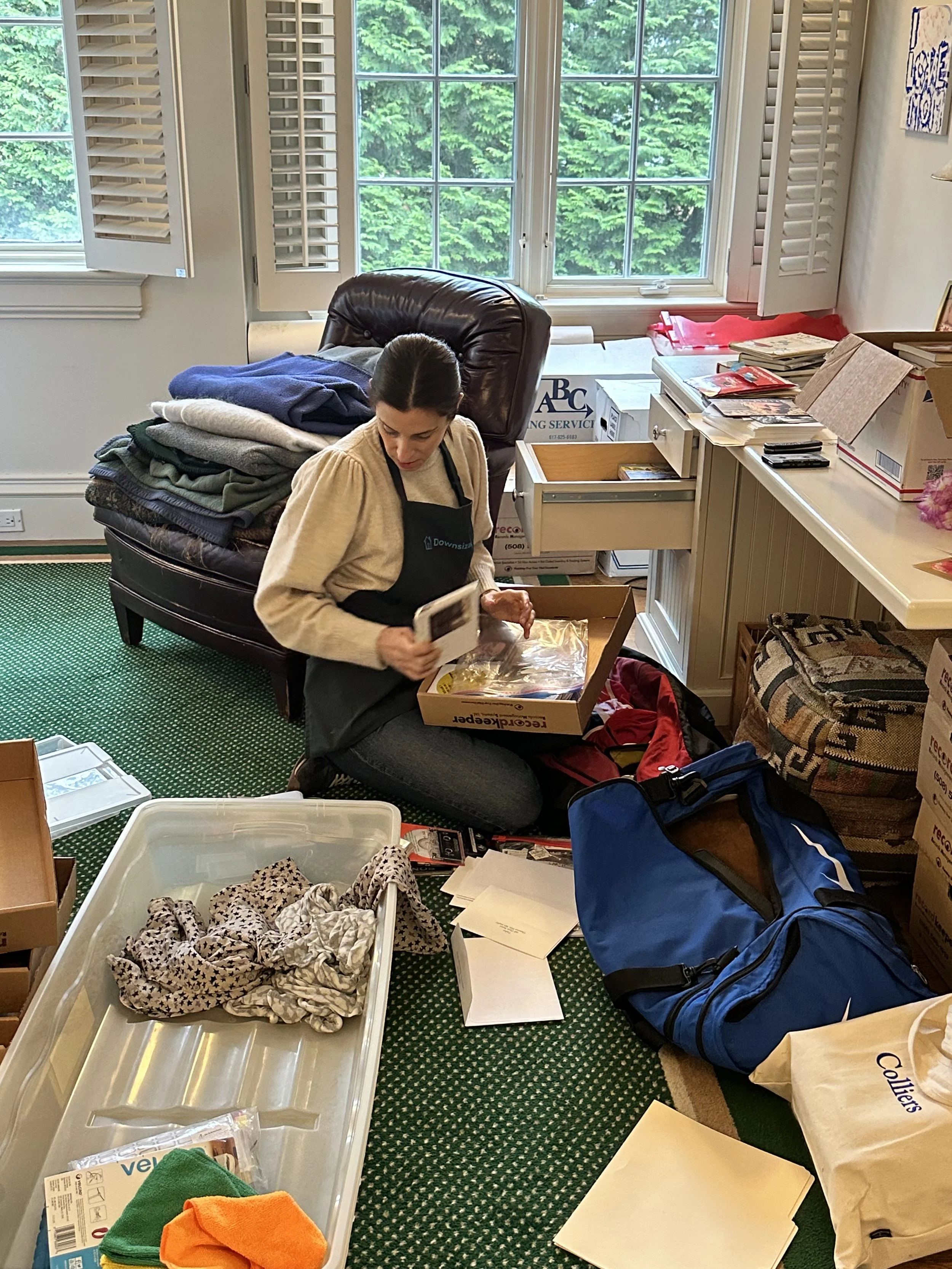
Why It Takes Longer Than You Think: The Grief Problem
The physical labor is only part of the challenge. The deeper, less talked-about problem is this: you are being asked to make hundreds of important decisions while your brain is scientifically, physiologically impaired.
This isn't weakness. It's biology.
Research has found that grief disrupts the prefrontal cortex — the part of the brain responsible for decision-making, problem-solving, and evaluating consequences. Nearly 91% of widows report experiencing brain fog after losing a spouse. Of those, 44% said it lasted two years or more.
Grief counselors have a name for the experience: grief brain. It's the fog that makes you put your keys in the freezer. It's the reason you can stand in a kitchen for twenty minutes unable to decide what to do with a can opener. It's real, it's documented, and it makes every decision in that house harder than it should be.
And yet — the decisions can't wait. Estate cleanout is what grief counselors call a "decision avalanche." Lease deadlines, probate requirements, property sales, family coordination — these things don't pause while you heal. You are being asked to make some of the most emotionally loaded choices of your life at exactly the moment you are least equipped to make them.
It's Not Just Stuff. It's a Person.
There's a reason professional estate cleanout workers approach their job differently than a standard moving crew. They're not moving things. They're handling a life.
Every room contains layers. The practical items — furniture, appliances, clothing — can be sorted relatively quickly. But then there are the other things. The birthday cards saved in a shoebox. The handwriting on a grocery list stuck to the fridge. The reading glasses on the nightstand. The half-finished project in the garage.
These objects aren't just objects. They are the last physical evidence of a person who no longer exists in the world. Deciding what to do with them isn't decluttering. It's a form of grief work.
Family dynamics make it harder. Siblings who haven't spoken much suddenly have strong opinions about who gets what. Old wounds resurface. One person wants to keep everything; another wants to be done with it. Someone flies in from across the country with a limited window of time. Someone else isn't ready at all.
The emotional toll, experts say, can actually be greater than the physical one.
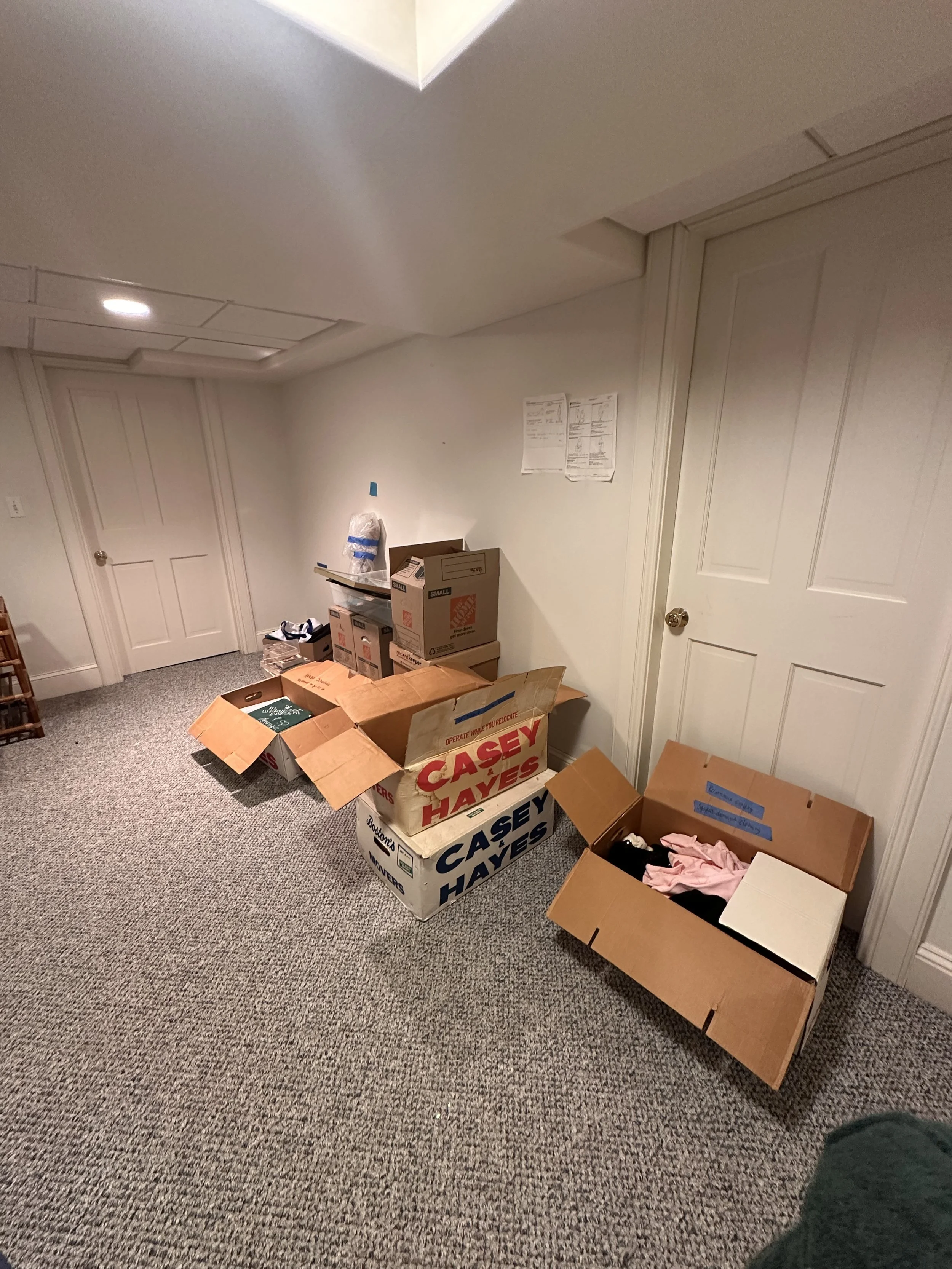
Packing boxes during an estate cleanout
What Helps
If you're facing an estate cleanout — or helping someone who is — here are the things that actually make a difference:
Work in short sessions. Most grief counselors and professional organizers recommend working in 2 to 3 hour blocks rather than full exhausting days. Marathon sessions lead to poor decisions and emotional burnout.
Use the three-pile method. Rather than forcing every decision immediately, the National Institute on Aging recommends three categories: keep, give away, and not sure. The "not sure" pile is not failure — it's self-compassion.
Assign roles, not rooms. Designate one person as the keeper of stories — someone who notes the memories and anecdotes that surface as you sort. This creates a record of family history while allowing the practical work to continue.
Don't go it alone if you don't have to. Bringing in a professional estate cleanout service isn't abandoning your loved one. It's a practical decision that frees you to focus on the things only you can do: choosing what to keep, honoring memories, being present with your family. The heavy lifting can be delegated. The grief cannot.
Give yourself permission to go slowly. There is rarely as much urgency as it feels like there is. If finances, safety, or legal timelines allow any flexibility at all, move at the pace that grief requires — not the pace that anxiety demands.
The Thing No One Says Out Loud
Somewhere in our culture, there's an expectation that estate cleanout is just a logistical task. Something to check off a list. Get it done, get the house ready, move on.
But the people who have been through it know the truth: it's not a task. It's a process. It's one of the ways we say goodbye to someone we love, one drawer at a time. It takes as long as it takes. And it's okay — more than okay — to ask for help.
If you're in it right now, be gentle with yourself. The fog will lift. The decisions will get made. And the things that matter most will find their way to the right places.